
The local SEO industry has an 80-item-checklist problem. Every "ultimate guide" gives you the same bloated list: claim your GBP, post weekly, add photos, build citations on 50 directories, beg for reviews, optimize alt text on your homepage. Most of these items will not change your local pack visibility by a single point. A few of them will change it by a lot.
The local pack (the 3 business listings with a map that show up for "X near me" queries) is decided by 4 factors. Everything else is downstream of those 4. If you do not understand which lever you are pulling and how much it moves the pack ranking, you are just doing busywork.
Here is the no-fluff version. Four pillars, what each one actually is, how to influence it, and what to ignore.
The 4 pillars
How close your verified business address is to the searcher's location at the moment of the query.
How well your business's category, attributes, services, and content match what the searcher is asking for.
How established your business is in the local market, measured through reviews, citations, and external mentions.
What searchers actually do when they see your listing. Clicks, calls, direction requests, website visits, photo views.
Proximity (the one you cannot fake)
Proximity is the dominant ranking factor for queries with "near me" semantics, which is most of them on mobile. If a competitor's verified address is 0.4 miles from the searcher and yours is 2.3 miles away, the competitor usually wins that query, and the gap is rarely closed by better reviews, a better website, or better photos.
You cannot fake proximity, but you can influence two things about it:
- Your verified address. Some businesses have flexibility on where to sign a lease. If you are choosing between two locations and one is in a denser commercial corridor closer to your target customers, that choice is itself a local SEO decision.
- Service-area businesses. Plumbers, electricians, mobile mechanics, roofers. GBP lets you define a service area instead of (or in addition to) a physical address. Configure the service area accurately. Do not overreach. Listings that claim service areas inconsistent with their actual operations get demoted by Google's spam filters faster than people realize.
What proximity is not: it is not your website's address in the footer. Google determines proximity from your verified GBP location, not from your website markup. LocalBusiness schema on your site is for entity grounding and search engine confidence, not for the local pack proximity calculation.
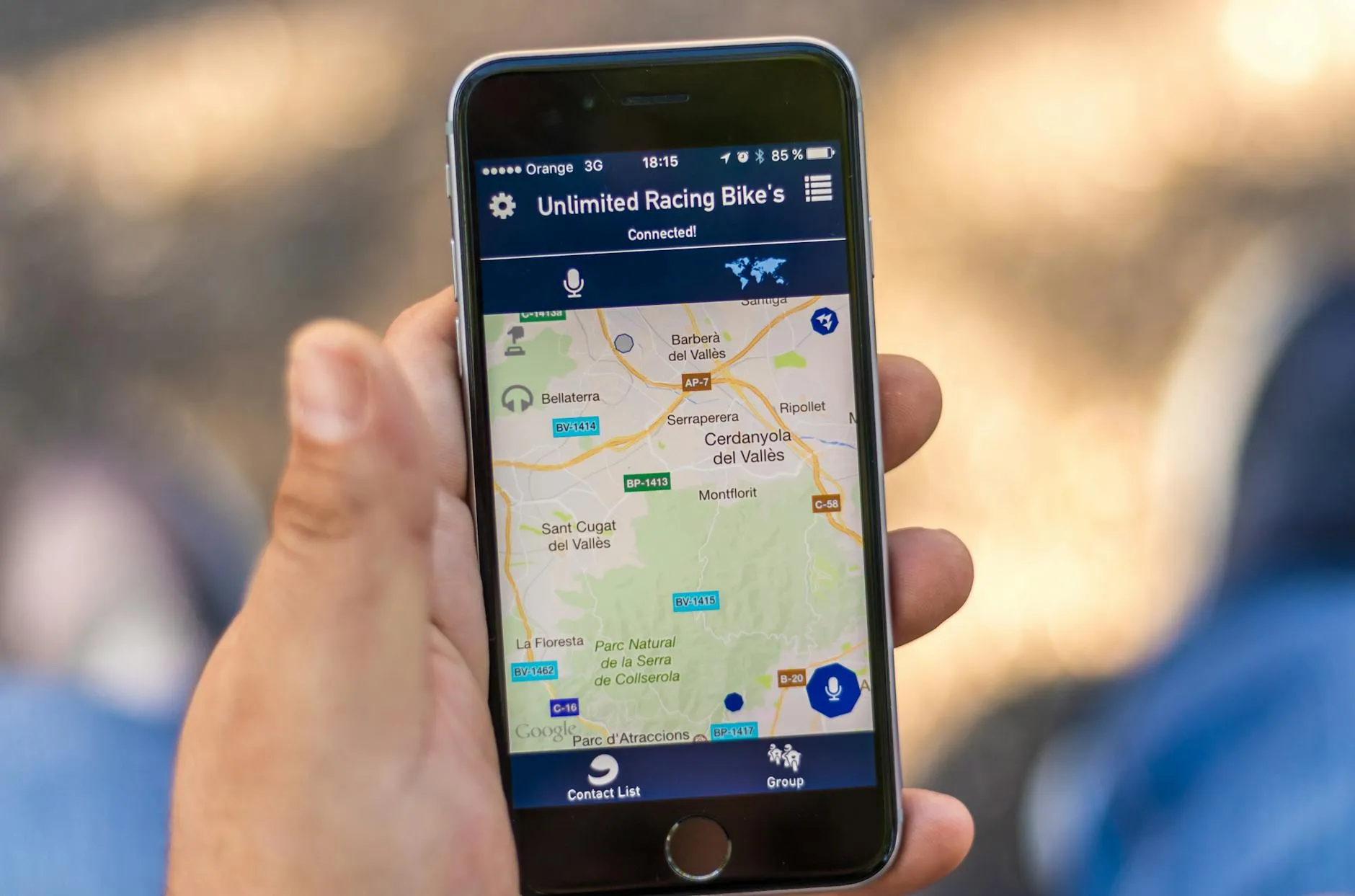
Photo by George Sultan on Pexels
Relevance (the one with the most leverage)
Relevance is where most small businesses leave the most points on the table, because it is where the tactical work compounds. Five concrete moves move relevance:
Primary category
Pick the most specific GBP category that accurately describes your business. "Dentist" is fine. "Cosmetic Dentist" is better if that is your focus. "Pediatric Dentist" is best if that is what you actually are. The primary category is the single highest-weight signal for which queries you are eligible to appear on. Get this wrong and no amount of other optimization saves you.
Additional categories
Add up to 9 additional categories that legitimately describe services you offer. Each one expands the query universe you are eligible for. Do not add categories you do not actually serve. Google cross-checks against your reviews, photos, and services list, and demotes listings that claim categories inconsistent with their evidence.
Attributes
GBP attributes (wheelchair accessible, free wifi, outdoor seating, women-owned, LGBTQ+ friendly, accepts new patients, online appointments) are not cosmetic. They power filter-based queries ("women-owned bookstore near me") and feed into the relevance calculation for any query whose intent includes those attributes. Fill in everything truthful. Audit them quarterly because Google adds new attributes regularly.
Services and products
Use GBP's structured Services section. Each service should have a name that matches actual query language, a price (or "varies"), and a 2 to 3 sentence description. Services entries get indexed and influence which sub-queries trigger your listing. A pediatric dentist with "Sealants" listed as a service appears for "pediatric sealants" queries. Without that service entry, the same business often does not.
GBP posts
Posts are short content updates that appear on your GBP listing. They do influence ranking modestly but their main job is keeping your listing "fresh" in Google's view. Post 2 to 4 times per month with real content (a new service, a recent project, a community involvement). Do not post for the sake of posting. Empty posts do nothing.
Photo by Jan Wright on Pexels
Prominence (the slow compounding pillar)
Prominence is the slowest factor to influence but the one that compounds longest. It is built from three sources:
Reviews
Both quantity and velocity matter. A business with 240 reviews and 4 new ones per week looks more prominent than a business with 240 reviews where the last one was 9 months ago. Aim for steady review velocity rather than batched campaigns. Three to five organic reviews per week is more valuable than 30 reviews in one week from a campaign.
Review content matters too. Reviews that mention specific services ("Dr. Smith did my crown") get parsed by Google and reinforce the relevance signal for those services. Replying to every review, positive or negative, is also a documented ranking factor and shows up in Google's local quality guidelines.
Citations and NAP consistency
Your name, address, and phone number (NAP) should appear identically across every directory where your business is listed. The big ones that genuinely matter in 2026: Apple Maps Connect, Bing Places, Facebook, Yelp, Better Business Bureau, your industry-specific directories (Avvo for lawyers, Healthgrades for doctors, TripAdvisor for hospitality, Houzz for home services).
The myth: you need 50 to 200 citations on every directory under the sun. The reality: 10 to 15 high-quality, NAP-consistent citations on relevant directories outperform 200 inconsistent ones. The inconsistent ones actively hurt because they make Google less confident about your canonical NAP.
The right tactical move: pick the 10 most relevant directories for your industry, claim them, ensure NAP matches exactly (same suite number, same abbreviation pattern, same phone format), and stop. Audit annually.
External mentions and links
Local news mentions, blog posts about your business, community sponsorships that get a website mention, podcast appearances, anything that puts your business name (ideally with your NAP) on another credible site. These build prominence over time. Press releases and paid placements do almost nothing. Real, contextual mentions on real local sites do almost everything.
Behavioral signals (the one you build by being good)
Google watches what happens after your listing shows up. Click-through rate on your listing, click-to-call rate, direction request rate, website click rate, photo view depth, and bounceback to search (the user looked at your listing and immediately searched again because you did not satisfy them). All of these get aggregated into a behavioral score that influences future rankings for similar queries.
You influence behavioral signals by:
- Having strong photos. The first 3 photos on your GBP listing carry disproportionate weight. Make them genuinely good. Professional photography pays for itself within a month for most local businesses.
- Filling in everything. Listings with hours, services, attributes, photos, descriptions, and Q&A all populated get higher click-through rates than sparse listings, even at the same map position.
- Maintaining accurate hours. "Open now" vs "Closed" at the moment of search is one of the largest CTR factors. Special hours for holidays should be set in advance, not after the fact.
- Having a fast, mobile-friendly website. The website click from your GBP listing should land on a page that loads in under 2 seconds on mobile. Bouncebacks from slow sites get attributed to your listing and degrade ranking.
What to actually do this month
If your local pack visibility is weak, here is the ordered priority list for the next 30 days:
- Audit your GBP primary category. Change it if it is not the most specific accurate option.
- Add or refine 5 to 8 additional categories, all legitimate.
- Fill in every GBP attribute that truthfully applies.
- Add at least 6 services in the structured Services section with real descriptions.
- Replace your first 5 GBP photos with professional shots if you do not have them already.
- Set up a sustainable review request flow that produces 3 to 5 new reviews per week organically. Tied to actual customer interactions, not blasted to a list.
- Audit NAP across your top 10 industry directories. Fix any inconsistencies.
- Add LocalBusiness schema to your website's contact page and homepage with the most specific subtype available.
- Reply to every existing review you have not replied to yet.
- Set up monthly tracking of your local pack position for your top 8 queries using a geo-anchored rank tracker.
That list, executed well, will move local pack visibility for most small businesses within 60 to 90 days. The 80-item checklist will not, because most of its items are below the noise floor. For what it looks like on a real listing, the local practice we ran this playbook on is a Central Florida wildlife removal company, with the category, service-area and photo work documented week by week. How its first month compared with an Orlando law firm's is in weekly SEO for two Central Florida businesses.
What to stop doing
Some common local SEO advice is genuinely a waste of time in 2026:
- Mass directory submissions. Submitting to 200 obscure directories produces inconsistent citations that hurt more than help.
- Keyword-stuffed business names. "Joe's Plumbing Best Plumber Near Me Open 24/7" violates Google's naming guidelines and gets you suspended.
- Fake reviews. Google's review filtering in 2026 catches almost all of them, and listings caught with review manipulation get severely demoted.
- Posting GBP updates 5 times a week with no actual content. Quality signal weight collapsed years ago. Empty posts are a tax.
- Spammy schema. Marking up testimonials as aggregateRating when they are not actual reviews, or claiming categories you do not serve. Google parses this and demotes accordingly.
Local SEO is not complicated. It is mostly about getting the four pillars right and not actively shooting yourself in the foot with the spam tactics that used to work. Pick the right category, fill in the listing properly, get steady reviews, keep NAP consistent across the directories that matter, and have a website that does not embarrass you. That is roughly 90% of the game.
The hard part is not knowing the list. It is doing the same four things every week for a year while running the business the listing is supposed to promote, which is the part that quietly does not happen. If you would rather hand that cadence to someone else, our local SEO management service runs it weekly on a flat monthly plan: GBP posts pushed on schedule, review replies drafted, NAP checked across the directories that count, and the map pack tracked so you can see whether any of it is working.